
Guides
Sourdough focaccia with a cold overnight rise
Tall, airy, olive-oil-soaked focaccia leavened only with sourdough. The long cold ferment gives it a nutty depth that quick yeast versions never reach, and it stays fresh for days.

Key takeaways
Refresh the starter
Mix the build and leave warm (26 to 28 C) for 4 to 8 hours, until doubled and domed.
Mix and rest
Combine flour and cold water roughly and rest 40 minutes (autolyse). Then add the ripe starter, mix well, and finally work in the salt and olive oil.
Folds, then cold ferment
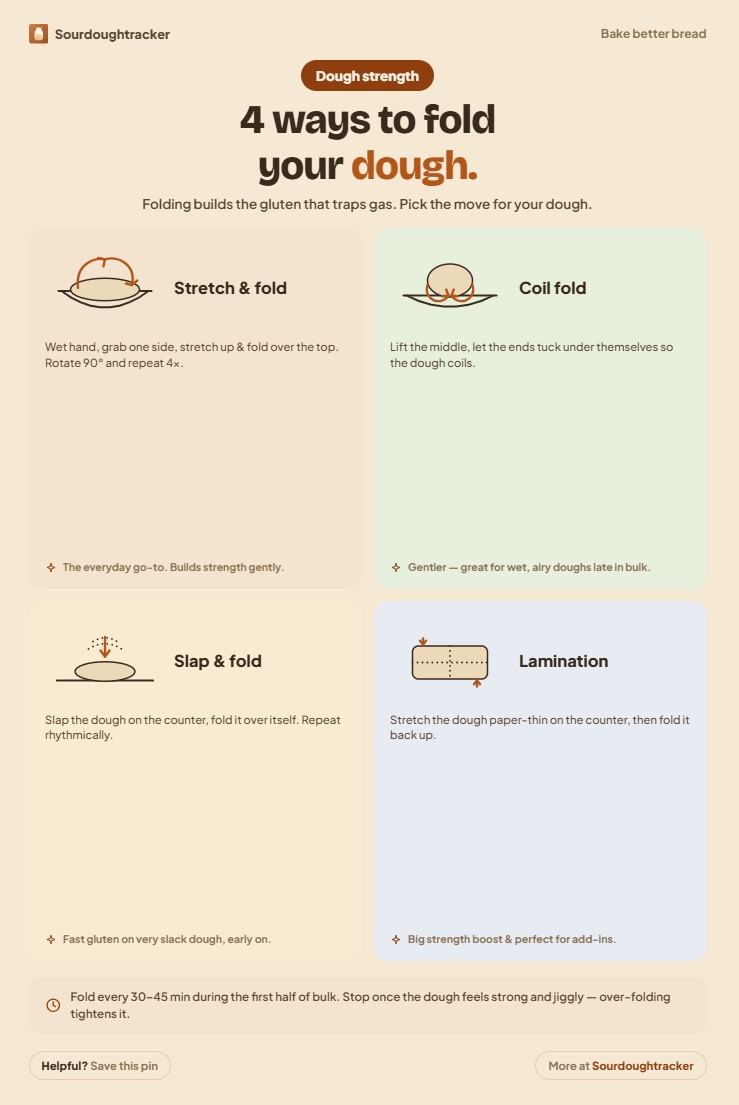
Over the next 3 hours, do 3 sets of stretch-and-folds in the bowl, about 45 minutes apart. Then cover and refrigerate 12 to 16 hours.
Pan and proof
Tip the dough into a generously oiled pan, let it relax 1 hour, then gently stretch it toward the corners. Proof about 4 hours at room temperature until pillowy.
Dimple and top
Oil your fingers and press deep dimples all over. Drizzle with more oil, scatter rosemary, sea salt and any toppings.
Bake hot
Bake at 250 C for 10 minutes, then drop to 210 C for 15 to 20 minutes until deep golden. Mist with a little water as it comes out for a softer top, and cool at least an hour.
Why the overnight version wins
Focaccia is the most forgiving thing you can make with a starter: a wet dough, an oiled pan, and very little shaping. The trick that separates a great one from a good one is time. A 12 to 16 hour cold ferment builds aroma, makes the crumb more digestible, and gives you those big, glossy bubbles when you dimple it. It's a high-hydration dough (around 66%), so embrace the stickiness.
What you need
Makes one sheet-pan focaccia (about 22 by 33 cm).
The topping is yours
Rosemary and sea salt is the classic, but halved cherry tomatoes, thin onion, olives, or a scatter of oregano all work. Push the toppings into the dimples so they don't slide off, and be generous with the oil: focaccia is supposed to fry a little in its own pool of olive oil at the base.
Anything that can scorch, like olives, herbs or dried tomatoes, should be pressed down into the dough rather than left sitting on top, so it bakes protected instead of burning. A few tricks help: toss the toppings in a little olive oil first so they stay glossy and don't dry out, soak dried tomatoes in water beforehand so they don't char, or cover the focaccia for the first part of the bake and remove the lid or foil near the end.
Flour and oil: small choices, big crust
Two ingredient choices shape the result. A bread flour (Tipo 0 or Type 550) gives the chewy, structured crumb focaccia is known for; a softer all-purpose flour makes it more tender but slightly less airy. For the oil, a regular olive oil takes the high bake heat better than a peppery extra-virgin, which can turn bitter and smoke near 250 C; save the good extra-virgin for drizzling over the finished bread. Be generous either way, because the oil pooled in the pan is what fries the base to that golden, crisp underside.
Plan it around your day
The timeline bends to your schedule. The classic run: feed the build in the morning, mix the dough in the early evening, fold it over the next three hours, then let it cold-ferment overnight. Pan it the next morning, proof through the late morning, and bake for lunch. If you need it ready for guests, par-bake it: bake 15 to 18 minutes until just set but still pale, cool it, then finish in a hot oven for 8 to 10 minutes right before serving so it arrives warm and crisp.
Keeping and reheating
Focaccia is best the day it's baked but keeps well. At room temperature in a paper bag it stays good for two days; the cold ferment and the oil keep it moist longer than a lean loaf. Don't refrigerate it, which dries it out. To bring day-old focaccia back to life, sprinkle a few drops of water on top and warm it in a 200 C oven for 5 minutes, or split and toast it. It also freezes well, sliced and bagged, for up to a month.
Fixing a flat or gummy focaccia
Two faults come up again and again. A dense, flat focaccia was under-proofed or got knocked back when you panned it: handle the cold dough gently, never punch it down, and let the final proof run until it looks visibly puffed and jiggly. A gummy, undercooked centre means it came out too soon or the oven wasn't hot enough; bake until the whole top is deep gold and the base is firm and crisp when you lift a corner. If your dough barely moved overnight, the hydration may be off or the starter wasn't ripe when you mixed.
Infographic: stretch and fold
Here's the whole thing on one page. Tap it to download, or pin it for your next bake.
 Download
FAQ
Frequently asked
Try Sourdough Tracker
Free plan, no credit card. We host in Germany. You can export and delete everything self-serve.
Read next
Sourdough pizza in a home oven (100% starter)
Crisp 100% sourdough pizza, baked in an ordinary home oven.
Read
Sourdough ciabatta (high hydration, big holes)
A very wet ~80% hydration sourdough ciabatta: stretch-and-folds, no tight shaping, big holes.
Read
How to read hydration % - and why it changes everything
The hydration calculation in plain words, plus a target table.
Read