
Topics
What Is Sourdough Starter Discard - And Should You Be Tracking It?
Discard is not waste. It's a fermented ingredient you generate every time you feed - and tracking how much you have changes how you cook with it.

What discard actually is
Discard is the portion of starter you remove before each feed. You do it because without discarding, every feed would double your starter's volume - within a week you'd have kilograms of starter demanding kilograms of flour to sustain. Discarding keeps the colony to a manageable size. The removed portion isn't dead or inert: it's a mixture of flour, water, wild yeast, and lactic acid bacteria at various stages of fermentation. It tastes tangy, has decent gluten structure, and behaves like a mild leavening agent in baked goods. One important distinction: during the first 5-7 days of building a brand-new starter, the early discard really does go to compost - the ecosystem is still in flux, with many competing microbes (not all of them well-suited for food). Once your starter has made its first successful bread and the healthy colony is established, the discard is safe, flavorful, and worth cooking with.
Fresh discard vs old discard: they behave differently
Fresh discard (just removed, not yet refrigerated) is at peak fermentation activity. It has the most leavening power and the mildest flavour. Best for recipes where you want it to contribute lift: waffles, pancakes, flatbreads. Old discard (been in the fridge for 3-7 days) is more sour, less active as a leavener, but has a more complex flavour. Best for recipes where flavour is the point: crackers, pizza dough, pasta. Very old discard (10+ days in the fridge) is extremely sour and has very little leavening power. Good for flavour-forward applications where a commercial yeast or baking powder will do the lift.
Five things to do with discard instead of throwing it out
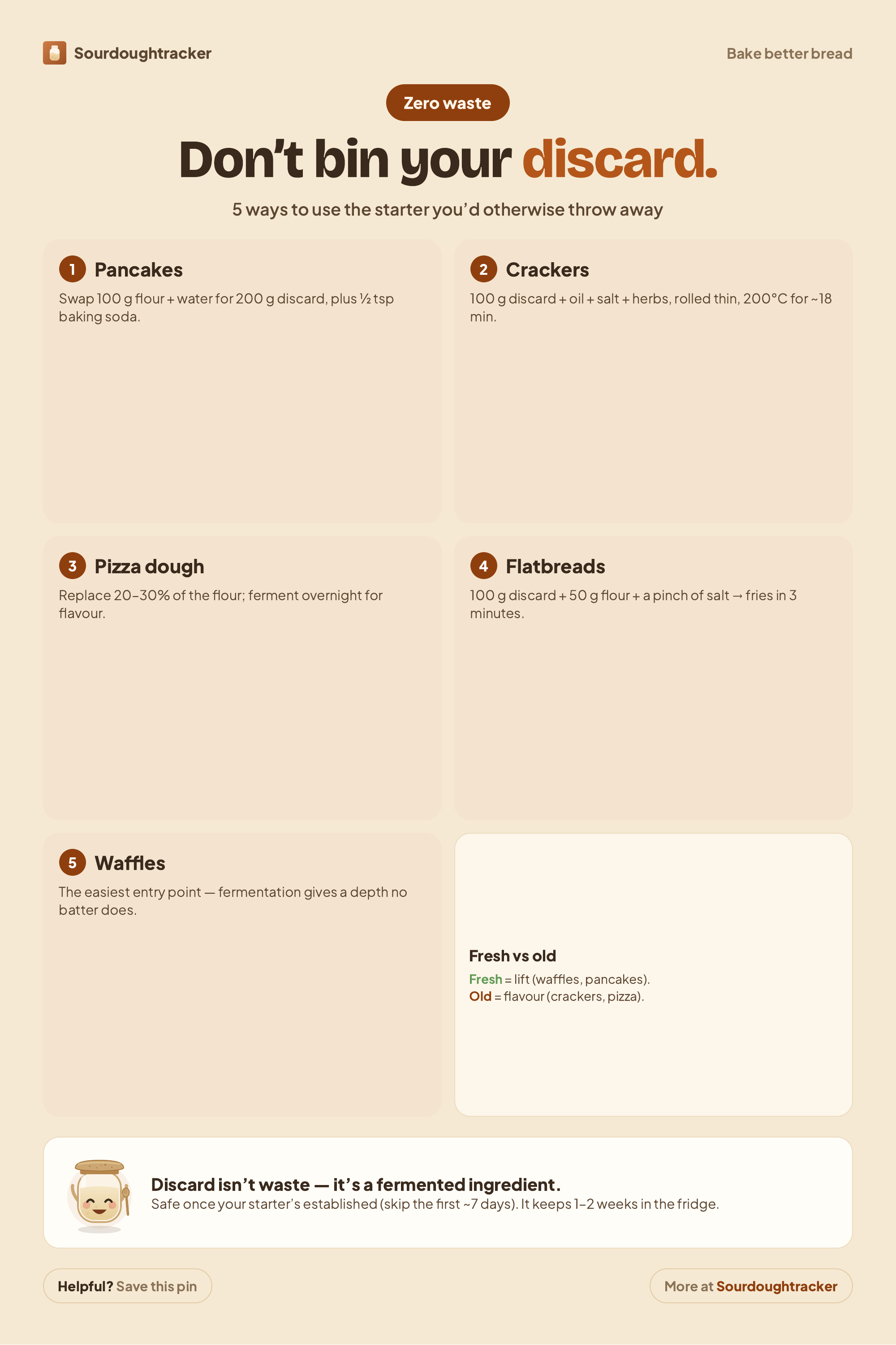
1. Pancakes - replace 100g of the flour + water in any pancake recipe with 200g discard. Add a teaspoon of baking soda for lift. Tangy, crispy edges, better than any boxed mix. 2. Crackers - 100g discard + 1 tbsp olive oil + salt + herbs, rolled thin, baked at 200°C for 18 minutes. Crisp, flavourful, zero waste. 3. [Pizza dough](/guides/recipe-sourdough-pizza) - replace 20-30% of the flour in any pizza recipe with discard. Ferment overnight for flavour. 4. Flatbreads / wraps - 100g discard + 50g flour + pinch of salt = a quick flatbread that fries in 3 minutes. 5. Waffles - sourdough discard waffles are the easiest entry point. The fermentation gives them a depth no regular batter achieves.
Why tracking your discard amount matters
Most bakers throw away more discard than they'd admit. Once you start tracking it - even just noting 'discarded 80g' or 'discarded 120g' - two things happen. First, you start planning recipes around your actual discard supply instead of improvising. Second, you notice the discard amount is directly related to your feeding pattern: if you're routinely generating 200g of discard per day, it's a signal to reduce your starter base size and waste less flour. Sourdough Tracker tracks your discard amount next to each feed entry, so the total is always visible without mental math.
Infographic: 5 ways to use discard
The five fastest discard recipes on one page. Tap it to download, or pin it for later.
 Download
FAQ
Frequently asked
Try Sourdough Tracker
Free plan, no credit card. We host in Germany. You can export and delete everything self-serve.
Written by
Julia Yukovich
Co-Founder + CEO
Julia is one of the Co-Founders. She handles design, development, product direction, and most of the support replies that arrive in the morning.
Read next
What Is Sourdough Starter Hooch? (It's Not What You Think)
Hooch explained: what it is, what it means, and exactly what to do with it.
Read
The Complete Sourdough Starter Feeding Guide: Ratios, Timing, and Temperature
Feeding ratios, timing, and temperature explained in one place.
Read
The best flours for sourdough - and when to pick which
A practical round-up of the flours every home baker actually uses.
Read