
Guides
Krümelsauer: dry your starter into crumbs for long storage
Not baking for a few weeks? Instead of feeding (or tossing) leftover starter, stir in enough rye flour to turn it into dry, crumbly streusel. It keeps for a month or more in the fridge with zero upkeep, and wakes up with a single feed.

Key takeaways
Start with leftover starter
Use the discard you'd normally remove before a feed, or whatever starter you have left over. A ripe, active starter crumbs and revives best, but any leftover works.
Work in rye flour to a crumble
Stir and rub in rye flour a little at a time until the paste breaks up into dry, sandy crumbs - the texture of a coarse streusel. Keep going until no wet, sticky clumps remain.
Store cold in a lidded container
Tip the crumbs into a clean jar or tub with a lid and keep it in the fridge. It stays good for about 4 to 5 weeks with no feeding.
Re-crumb if a month passes
Still not baking? Take a portion, work in a little fresh rye flour (a few drops of water first if very dry), and crumb it again to reset for another few weeks.
Reactivate with a feed
To bake again, stir a spoonful of crumbs with flour and lukewarm water to a normal consistency and leave it warm. Feed once or twice over a day or two until it's bubbly and rising, then use it as usual.
The lazy way to keep a starter alive
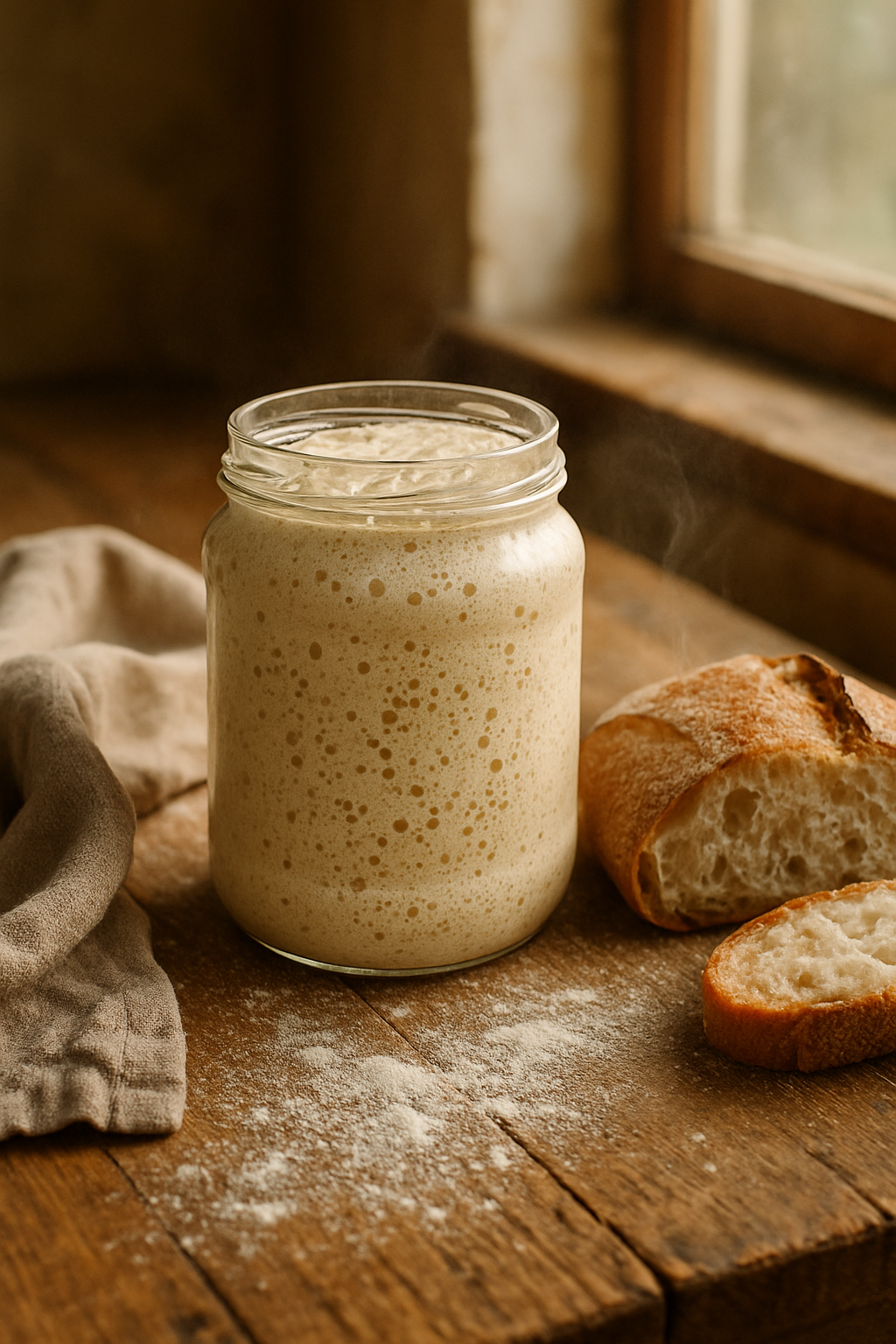
Most starter-storage methods still ask something of you: a weekly fridge feed, or a careful drying-and-grinding ritual. Krümelsauer sits between them and asks for almost nothing. You stir rye flour into leftover starter until it stops being a paste and becomes dry, sandy crumbs - like a coarse streusel - and that's it. The flour pulls the moisture down so far that the colony slows to a crawl, the way it would in the fridge, but without the wet, hungry mush that needs feeding. It's the answer to the very common question: I'm not baking for a few weeks, what do I do with my starter?
Why rye, and why crumbs
Rye flour is the traditional choice because it's thirsty and packed with the wild yeast and bacteria a starter thrives on, so it both dries the mixture and feeds the colony as it goes dormant. The crumb texture matters too: small, dry granules have very little free water, and water is what lets the microbes stay active. Drop the moisture and you drop their metabolism, which is exactly the dormant, shelf-stable state you want. Wheat flour works in a pinch, but rye keeps the culture liveliest.
Keeping it going if you still haven't baked
Four to five weeks pass and life got in the way - that's fine. You don't have to start over. Take a portion of the crumbs, work in a little fresh rye flour (add a few drops of water first if they've gone too dry to bind), and crumb it again. You're essentially giving the dormant culture a small meal and re-drying it, which resets the storage clock for another few weeks. You can repeat this indefinitely, so a jar of Krümelsauer can quietly outlast a long stretch of not baking.
Waking it back up to bake
Reactivating is just a feed. Take a spoonful of the crumbs, stir in flour and lukewarm water to a normal starter consistency, and leave it warm. Within a day it should start to bubble; a second feed usually brings it back to full, doubling strength. Treat it like any starter coming out of dormancy - patience over the first feed or two, then it's ready. If yours is slow to revive, the same diagnostics in our fridge storage and revival guide apply, and the starter troubleshooting hub covers anything that still looks off.
FAQ
Frequently asked
Try Sourdough Tracker
Free plan, no credit card. We host in Germany. You can export and delete everything self-serve.
Read next
Put your sourdough starter to sleep in the fridge (and wake it back up)
Intentional fridge dormancy, then a reliable wake-up routine.
Read
Sourdough starter troubleshooting: fix any starter problem
Symptom to cause to fix: the hub for every sourdough starter problem.
Read
The Complete Sourdough Starter Feeding Guide: Ratios, Timing, and Temperature
Feeding ratios, timing, and temperature explained in one place.
Read